Conference Proceedings Available!
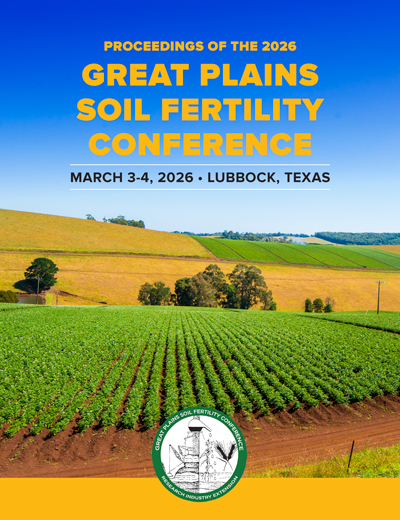
Proceedings
Authors
| Filter results13 paper(s) found. |
|---|
1. Tillage and Nitrogen Management for Irrigated Sugarbeet Production in Eastern MontanaSugar beet (Beta vulgaris L.) is an important cash crop in the Lower Yellowstone River region. Nitrogen management is very critical while farmers are transitioning sugar beet production from conventional tillage to no-till system. The objectives of this study were to: (i) evaluate the effects of fertilizer-N rate and application timing on sugar beet root yield, sugar content, and quality under conventional and no-till managements, (ii) determine N uptake and N use efficiency (NUE)... A. Sutradhar, W. Franck, R. Garza, C. Chen |
2. Effect of Foliar Zinc Application on Durum and Spring Wheat Grain Yield and QualityZinc (Zn) deficiency represents a common micronutrient deficiency in human populations, especially in regions of the world where staple food crops are the main source of daily calorie intake. Micronutrients like Zn also plays an important role in growth and development of plant thereby affecting crop yield and quality. A two-year field trial was conducted at Sidney, Montana, to investigate the effect of foliar application of Zn on yield and grain quality of spring wheat. Zinc treatment included... F. Etemadi, R. Keshavarz Afshar, H. He, S. Zhou, Z. Li, C. Chen |
3. Strategic Tillage Effects on Crop Yield and Soil Properties and Dryland Crop RotationsThis study evaluated strategic tillage (ST) to control HR weeds and improve crop yields in an otherwise long-term no-till (NT) soil. Treatments were five crop rotations: 1) continuous winter wheat (Triticum aestivum L.) (WW); 2) wheat-fallow (WF); 3) wheat-sorghum (Sorghum bicolor L.)-fallow (WSF); 4) continuous sorghum (SS); and 5) sorghum-fallow (SF) as main plots. The sub-plot were reduced tillage (RT), continuous NT, and ST of NT. Results showed tillage (ST or RT)... A. Obour, J. Holman, L. Simon, A. Schlegel |
4. In-furrow Placement of Dry Urea Prodcuts with Winter WheatPrevious research has shown that the application of some nitrogen fertilizer prior to or at the time of wheat seeding can positively affect the initiation of fall tillers and thus yield potential. However, there are logistical challenges in placing that nitrogen in no-till production systems. Traditionally, the placement of urea-based fertilizers in-furrow with wheat seed has not been recommended. The objectives of this project were to evaluate stand reduction and associated... L. Haag, A. Schlegel, D. Ruiz Diaz |
5. Long-term Forage Rotation Yields, Soil Water Use, and ProfitabilityForages are important for the region’s livestock industry and are becoming increasingly important as irrigation capacity and grain prices decrease. Forages require less water than grain crops and may allow for increasing cropping system intensification and opportunistic cropping. A study was initiated in 2012 at the Southwest Research-Extension Center near Garden City, KS, comparing several 1-, 3-, and 4-year forage rotations with no-tillage and minimum-tillage. Data presented are from 2013... J. Holman, A. Obour, A. Schlegel, L. Simon |
6. Effect of Soil and Foliar Application of Sulfur, Magnesium, Boron, and Zinc on Root Yield and Sugar Quality in Conventional Till and No Till Sugar BeetField experiment was conducted at the Eastern Agricultural Research Center in Sidney, MT, to determine the effect of S, Mg, B, and Zn on beet yield and sugar quality under conventional and no-till system. Split-plot design was used with 3.6 x 9.1 m experimental plots and four replicates. Tillage was main plot and micronutrient fertilizer was sub-plot. Tillage treatments included conventional and no-till. Fertilizer treatments included SUL4R-PLUS® (Ca & S), SUL4R-PLUS®B+Zn... C. Lim, C. Chen, C. Kowatch-carlson, B. Franck, T. Gross, R. Brown |
7. Lentil Inoculant, Potassium, Sulfur, and Micronutrient Effects on Yield and Protein in the Northern Great PlainsLentil (Lens culinaris Medikus) is an important crop, averaging more than 600,000 ac in MT and ND from 2016-20. However, relatively little is known about inoculant and fertility response in lentil in the U.S. northern Great Plains. The objective of this experiment was to evaluate the effect of rhizobial inoculant formulations (granular and seed-coat) and nutrient additions (K, S, and micronutrients), on lentil growth, yield, and seed protein. This study was conducted at six or seven university... P. Miller, C. Jones, S. Atencio, C. Chen, E. Eriksmoen, S. Fordyce, P. Lamb, M. Ostlie, J. Rickertsen, M.A. Grusak, M. Bourgault, B. Franck, P. Carr, S. Koeshall, K. Baber |
8. Impact of Fertilizer Phosphorus (P) Source, Rate, and Placement Strategy on Yield, Nutrient Uptake, and P Losses in Snowmelt Runoff Water Across Variable Topographies in Saskatchewan, CanadaThe plant availability and mobility in soil of a fertilizer phosphorus (P) source is influenced by the solubility of the fertilizer product itself as well as the reaction products formed in soil over time. In 2021, 2022 and 2023, responses of wheat, pea and canola yield, P uptake and recovery were determined using eight fertilizer P sources applied in a broadcast and incorporate or side-band placement strategy at a low and high (20 vs 40 kg P2O5 ha-1) rates in... B. Weiseth, J. Schoenau, J. Elliott |
9. Combined Nitrogen with Magnesium or Zinc Effects on Sugarbeet Yield Sucrose Concentration, and Nutrient Uptake Under Conventional and No-till SystemsSugar beet (Beta vulgaris L.) is an important cash crop in the Lower Yellowstone River valley. Fertility, especially nitrogen (N) fertilizer, management is critical for sugar beet yield and sucrose concentration. While farmers are switching from a conventional tillage method to a no-till system for sugar beet cultivation, nitrogen (N) fertilizer application timing might need to be adjusted. Furthermore, micronutrients may enhance sugar beet yield and sucrose concentration. A two-year... C. Chen, M. Etesami, M. Abdelhamid |
10. Nitrogen Fertilizer and Rhizobium Combinations to Improve Yield and Quality of Mung Bean and Adzuki Bean in MontanaMung bean and adzuki bean are new alternative grain legumes that may be grown in Montana and provide benefits to Montana’s cropping systems by improving long-term diversification and productivity. The objective of this study was to investigate mung bean and adzuki bean response to nitrogen fertilizer and rhizobium combinations to determine the optimum fertilizer management. Two adzuki bean (Organic and O.R varieties) and two mung bean (Organic and L.N varieties) cultivars were grown under... M. Etesami, F. Etemadi, T. Gross, B. Franck, C. Chen, C. Kowatch-carlson, S. Franck |
11. Agronomic Evaluation of Camelina Genotypes Selected for Yield, Oil Concentration, and NUEIn recent years, camelina (Camelina sativa L.) has received global recognition for its role as a biofuel crop and multipurpose addition to cereal-based farming systems in the Northern Great Plains (NGP). The present study objected to investigative the response of selected camelina cultivars, line 229, line 35, line 53, Suneson, and Check1 to nitrogen (N) and sulfur (S) inputs in terms of biomass, yield, seed oil content, and nitrogen use efficiency (NUE) at five nitrogen (N) rates, ranging... M. Etesami, C. Chen, B. Franck, S. Franck, C. Lu |
12. Evaluation of Nitrogen Fertilizer and Rhizobium Inoculation to Improve Grain Yield and Quality of Soybean and Dry Bean in Eastern MontanaInterest in production of irrigated soybean and dry bean in eastern Montana’s Lower Yellowstone River Valley increased substantially following the closure of a sugar beet processing facility in Sidney, MT resulting in the need for a replacement crop(s) on 30,000 to 40,000 acres annually. Yields of soybean and dry bean in this region varied significantly from 20 to 80 bu ac-1 in recent growing seasons, indicating a need for improved management practices. However, research-based... B. Franck, C. Kuester, K. Herhalo, C. Chen |
13. Evaluation of E-Grow Effects on Soil Plant Systems Gas ExchangeE-Grow is a novel fertilizer which effect on the soil- plant system is critical for understanding it’s impact on the crop productivity and environmental sustainability in agricultural operations that will be crucial for updating nutrient application recommendations, to understand this we conducted an experiment with the main objective of this study is to determine the effect of E-Grow on CO2 and H2O fluxes in agricultural soil and soil- cotton plant systems (seedling stage). This experiment... V. Sabbineni, E. Enninful, S. Jacobo, O. Gecgel, G.G. Botte, H. Laza, C. Simpson, L. Slaughter, Y. Emendack |
